
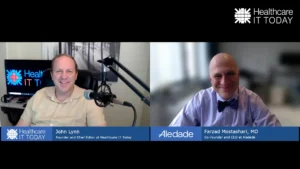
CMS provides numerous avenues to implement value-based care. Dr. Farzad Mostashari, who was the National Coordinator for Health Information Technology during a critical period of EHR implementations in the U.S., co-founded Aledade 11 years ago to make value-based care feasible—or as he puts it in this interview, “make it more profitable to prevent a stroke than to treat a stroke.”
Aledade now works with 2,400 practices and community health centers in 46 states and the District of Columbia. They have built their own technology to better facilitate value-based care, which includes interoperability, a prediction engine, user-friendly guided workflows and cutting-edge data analytics, all tied together to surface actionable insights at the point of care and drive/inform care coordination workflows.
Mostashari describes many of their activities in this video; all the activities described are simple and low-tech. For instance, practices that work with Aledade make sure that patients with high blood pressure use proper medications to control it. In the 2024 Medicare Shared Savings Program, Aledade and its partners achieved 82% hypertension control and served practices and health centers nationwide, many in health professional shortage areas, which is 4% higher than the national average. Approximately 90 practices, which include lots of small offices, community clinics and rural practices, are now recognized as champions in hypertension control by the American Heart Association and the American Medical Association. And according to Mostashari, blood pressure control is the single quality measure that saves the most lives.
Another high value albeit seemingly trivial action that saves unnecessary costs is to ask patients who are not experiencing urgent symptoms to contact the primary care doctor before going to the emergency room. In addition, Aledade’s timely alerts inform their partner primary care organizations to contact patients after an ER visit or hospitalization.
Mostashari wants to “build a 360-degree patient view inside the practice.” He points out that most doctors have no way of knowing whether a patient has failed to pick up prescribed medications. “A lot of care takes place outside the practice.”
Aledade’s partners prevented nearly 96,000 hospitalizations and 167,000 emergency department visits in 2024. The standard way that primary care practices deal with rising costs and stagnating reimbursements is to see more patients each hour. This leads to degraded care and more specialist visits, which are expensive. Mostashari cites one practice that is emblematic of its partners. After working with Aledade, the practice continued to see its value-based care revenue grow even though it increased the amount of time it spent with each patient. This extra time enabled the clinician to provide more holistic care – preventing avoidable costly acute events down the line – leading to better outcomes.
We also discuss with Mostashari the perverse incentives in fee-for-service and the contortions that practices undergo to increase reimbursements, which raise costs across the board.
So how can practices adopt value-based care? While it may take years for practices to feel ready, Mostashari ascribes the decision to a “change of heart.” It’s also crucial to partner with a company like Aledade that understands regulations and can help practices make the right decisions; many such partners don’t have the depth of regulatory knowledge or tech resources to do it effectively alone. In January, Aledade launched its own Policy Institute to strengthen primary care and advance value-based care through policy recommendations and expert collaboration.
Watch our interview for details about how AI can be a “major inflection point” in health care, and other insights from Farzad Mostashari about value-based care.
Learn more about Aledade: https://aledade.com/
Listen and subscribe to the Healthcare IT Today Interviews Podcast to hear all the latest insights from experts in healthcare IT.
And for an exclusive look at our top stories, subscribe to our newsletter and YouTube.
Tell us what you think. Contact us here or on Twitter at @hcitoday. And if you’re interested in advertising with us, check out our various advertising packages and request our Media Kit.
Aledade is a proud sponsor of Healthcare Scene.


