Before you mail any important documents, read this: Major changes are being made to the U.S. Postal Service (USPS) postmark process in 2026, and they could result in late fees and penalties for people who rely on the mail to send tax returns, bills, ballots and other important documents. To learn more about this massive shift in mailing, keep scrolling.

What to know about the new postmark rules
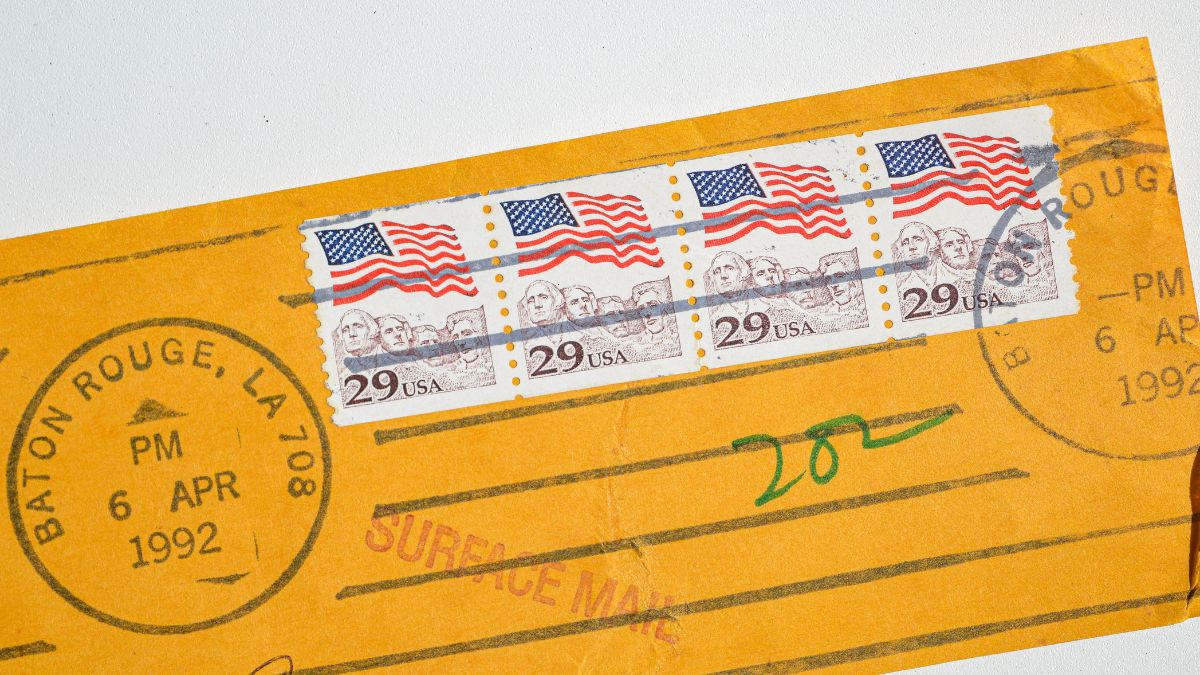
In December of 2025, USPS announced they would be changing postmark rules. In the past, the post office stamped mail with a postmark the day the item was processed—usually the same day you dropped it off in a mailbox. That allowed recipients, like credit card companies, the Internal Revenue Service (IRS) and local ballot collectors, to confirm that you mailed these timely items on time. Now, USPS is changing the postmark date to when the mail is processed at a postal facility—and that can be several days later.
By doing this, USPS hopes to streamline mail processing, cut costs and meet the strategic goals set for 2026. But with this change, experts are warning that documents, tax returns, credit card bills, utility bills and ballots could be processed late, resulting in late fees and potential penalties.

“Consumers have always assumed that the post office will postmark their mail on the day they take it to the post office or drop it in a box,” Edgar Dworsky, founder of advocacy site Consumer World and a former assistant attorney general in Massachusetts, told CNBC. “Who would expect it could be several days before it has a postmark on it?”

How to avoid penalties and fees under the new postmark rules
To avoid the expected penalties and fees under the new postmark rules, the USPS recommends consumers take their mail to a post office, station or branch, bring it to the counter and request a manual postmark. This ensures your item is stamped immediately.
But when you go to the post office, expect increased pricing, since starting on January 18, USPS is raising prices as follows:
- Priority Mail prices will start at $10.45 per package and $11.90 for a flat-rate Priority Mail envelope—a 6.6 percent increase.
- Priority Mail Express packages willstart at $32.50 and flat-rate envelopes start at $33.40—5.1 percent increase.
- USPS Ground Advantage will start at $7.20, up 7.8 percent.
- Parcel Select prices are expected to increase by 6 percent.

If you would rather avoid those price increases, the AARP recommends simply paying bills and taxes online. This will help avoid the potential delays and save you some money.
To learn how to do so, see the links below:
- To file tax returns online click here.
- To pay your taxes click here.
For credit card and utility bills, simply reach out to your creditor and ask how to enroll in their digital payment system.